English, math, and science, as important as they are, are often made out to be more fundamental than social studies, even though these classes are arguably the most applicable in a person’s life.
People tend to lean towards subjects that are simpler and that require less critical thinking, but not everything is black and white. Social studies reminds students that things are often complicated, and lessons like these properly prepare students for life after high school.
“You have the opportunity to now grow and understand that maybe the world isn’t as simple as I think it is, or someone’s been trying to tell me it is,” Shandon Nixon, a social studies teacher, said.
Typically, when students think of social studies, the first thing they think of is memorizing historical events, but history is only a part of social studies. Social studies focus on learning about oneself, other people, decisions people have made in the past, and more.
“If you don’t understand the human brain and the way that they interact with people and interact with the environment…it’s going to be very difficult to be a knowledgeable citizen, enough to vote in a way that would benefit your interests,” social studies department chair Rich Kurek says.
A minimum of four social studies classes is required to be eligible to graduate from Huntley High School; however, there are multiple social studies electives that are available for students to take, such as criminal law, psychology, global citizenship, and more. By taking social studies electives, students can find themselves in the Global Academy, which helps strengthen connections between social studies and other subjects.
“We have students working on different projects throughout the world right now, and so that idea that they could do something, that it’s not just learning about it,” social studies teacher Anne Sharkey said. “That’s one of the things that we really try to do in that academy, is getting to that possibility of ‘what can you do?’”
Some students may argue that social studies is not an important subject that pertains to their current or future lives; however, by simply taking a social studies class, students learn and develop a plethora of skills. For instance, students deepen their empathy when they analyze different perspectives.
“It’s an opportunity for you to create and think, challenge your thought processes, maybe listen to a view you didn’t think of before,” social studies teacher Jay Teagle says.
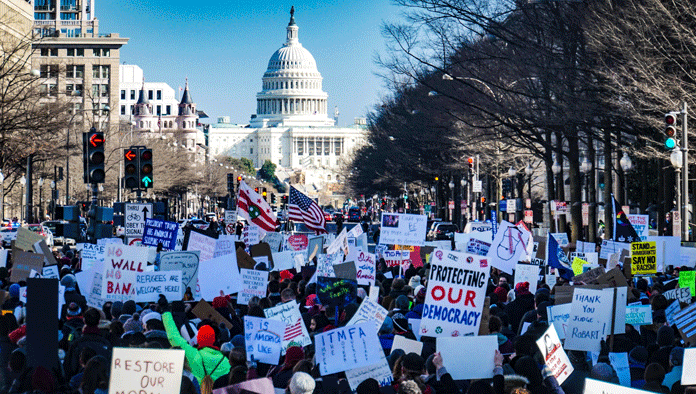
In these classes, students are educated on what goes on in the world and further develop the idea that they have the ability to change or work towards change if they don’t agree with world issues.
Within the Global Academy is the Write for Rights Project, where students have the opportunity to write letters to governments and individuals who have had their rights infringed upon in some way. This project helps push students to do something about concerns going on in the world rather than just talking about them.
Knowing politics, economics, and social interactions ensures students will shape into informed citizens who carry the ability to make decisions that benefit society overall. It’ll always be important to know one’s rights, as well as one’s place in society.
“Our job is to produce moral, ethical citizens, so that they can make informed decisions for the environment of the country,” said Kurek.