
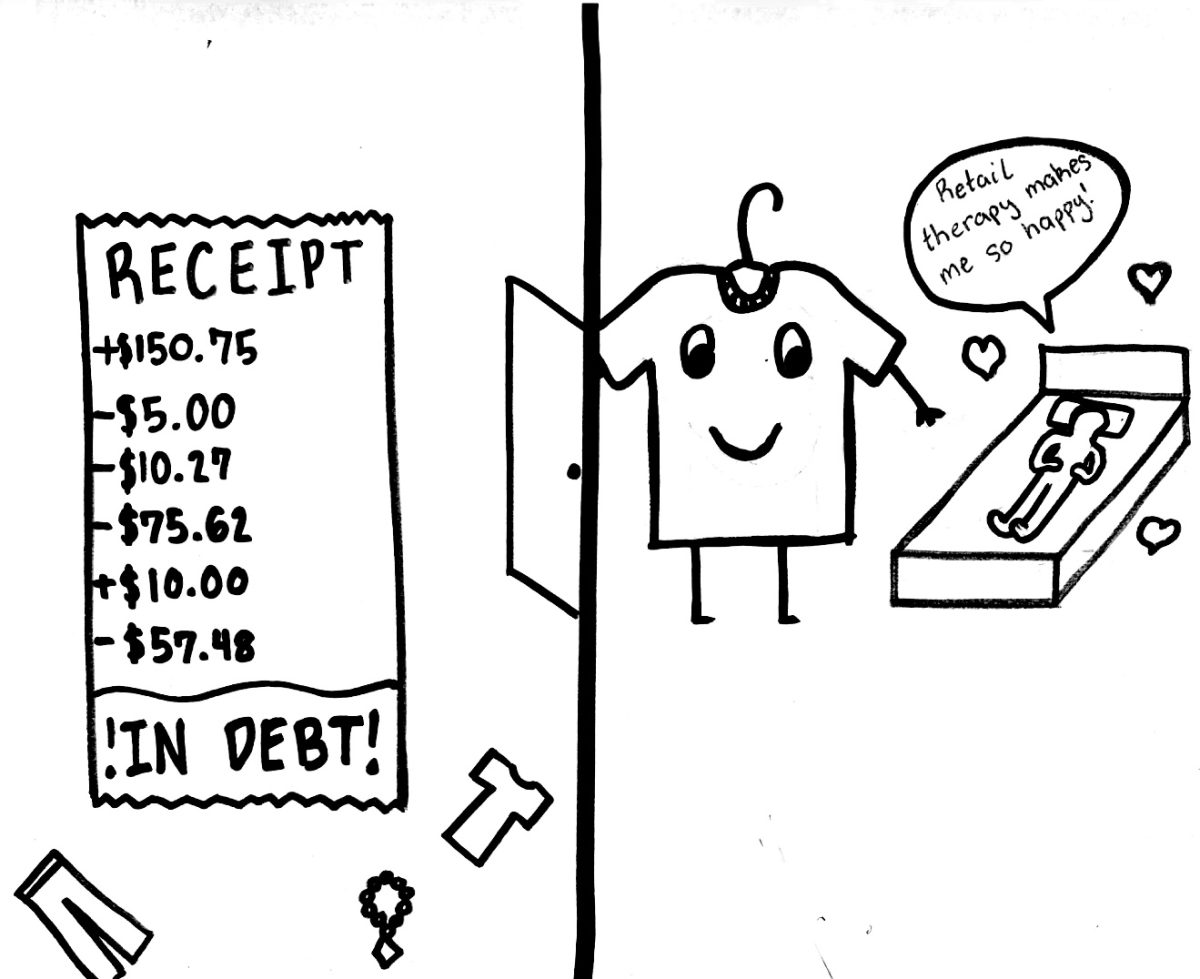
Scrolling on shopping platforms and walking through stores with friends has become a common way to cope with stress, boredom, or sadness.
This habit is often referred to as “retail therapy.” The benefits of hanging out with friends, getting outside the house, and partaking in a form of creative outlets are all positives of retail therapy; without the knowledge of the negative effects, it can quickly spiral.
What is often ignored is the long-term damage retail therapy can cause to financial stability and emotional well-being. While it feels good at the moment, retail therapy creates problems that can long-term outweigh its short-lived benefits.
When someone purchases something they like, the brain releases dopamine and creates a feeling of happiness. This is known as instant gratification.
Once the excitement fades, the original stress or sadness often returns, along with sometimes guilt about spending unnecessary money. This vicious cycle encourages people to keep buying to achieve that happiness again.
Shopping quickly turns into a coping mechanism rather than a healthy conscious choice. Finance teacher Kirsten Sanchez warns that retail therapy can quickly spiral into harmful habits.
“Retail therapy can demolish a person’s budget, and it can make you overspend as far as credit goes,”Sanchez said. “It can really get you in a bad position financially.”
When people begin to use shopping as an emotional outlet, they lose track of their spending. Instead of seeing the numbers leave their accounts, they only feel happiness.
Some people defend retail therapy by saying it provides social and emotional benefits. Going to the mall with friends, getting out of the house, and doing something enjoyable allows people to feel connected.
Unfortunately, for most teenagers, retail therapy often comes at a cost to their bank accounts. Every sophomore is required to have a finance education, which emphasizes the importance of budgeting to avoid these issues.
Students are taught to divide their income into categories of needs, savings, and wants. Retail therapy is a want and should take up a limited portion of a budget. Retail therapy promotes avoidance instead of problem-solving.
Instead of addressing the stress, people distract themselves with shopping. This does not fix the source of the problem, but only delays it. Over time, emotional regulation is tied to spending money rather than healthy coping strategies.
What can begin as a harmless habit can slowly become a dependency issue. Additionally, those struggling with managing their spending feed into the harmful consumeristic culture, which encourages people to believe that buying more will make them happier.
Whether that be on social media or advertisements, everyone is exposed to images showing the lives of others being completed due to the perfect product and the perfect life. This unrealistic expectation sometimes keeps students under pressure to “keep up.”
“More people fell for fast fashion and online shopping resources, and I understood these trends,” fashion teacher Jaclynn Avner said. “I also find that once people find their style, they may struggle less with spending as they already know what they need.”
While shopping can be fun and reasonable in moderation, it is very simple to fall into something more harmful financially than most can notice.
“As soon as I see something that I like, I just go over there and add it to my cart, and I just keep buying it,” senior Jack Edstrom said.
Retail therapy is not inherently evil, but it becomes dangerous when it is used on the financial side of it. Going out with friends and getting joy from that should be the main focus of going out, but being pressured to spend money or not notice the spending amounts plays into the danger.
No matter the season, most people know their way of “escaping” when life brings them through rough times.
For some, all they need is a few hours at the mall or a refreshing makeover. Teenage movies and shopping mall scenes say it all.
Walking into the store and possibly coming out with more than what you need leaves us with one question: “Is retail therapy truly helping our mental health or just overspending chaos?”
“Retail therapy is a short and quick source of dopamine,” Lauren Teeter said.
“Spending money for a little ‘pick me up’ helps everyone be happy since dopamine hits your brain,” junior Lizzie Rutkowski said.
The true answer to the question is both, but if you’re not careful with spending while shopping, it could lead to unhealthy habits. That’s why shopping could be truly exciting if it’s all done the right way.
Planning or preparing to shop is the most important part to consider to avoid overspending and to get the full experience.
Mindful spending can start with creating a budget and knowing the difference between a “want” and a “need.”
“Shopping is something that makes me happy and helps me cope,” senior Dylan Wheelock said. “I love shoes, so when I see some that I like I want them, and it really does help.”
Retail therapy, from a positive perspective, is classified by the Huntley community as a custom way to restore their mood, as long as they avoid overspending.
For those who are high school students, it isn’t always about spending money. Most teenagers take into consideration how much they are spending, but also see shopping as a source of socializing.
It is a great way of interacting with others, sharing interests or opinions with friends, and meeting others who share the same interests. Reducing loneliness and stress with the provided opportunity to shop is a big enhancement to our well-being.
“Just this past weekend, I went shopping with my amazing and wonderful friend Sara, and I spent $40, and it was so worth it,” Rutkowski said.
Retail therapy is described by students as a way of getting outside and refreshing ourselves when we choose to shop in person. Using this as a way to step out of the house gives a break from everyday routine.
Once in a while, it is okay to consider a confidence boost. Practicing retail therapy is a way to bring out your creative side by experimenting with new looks.
“‘Look good, feel good’ is the best mindset when it comes to shopping,” senior Jocelyn Jones said.
Even on a low budget, clearance sections in stores offer a wide variety and sense of style that is made for anyone. It offers the same thrill of shopping and is highly recommended to feel less guilty when spending.
Spending money the right way is an effective sense of control, resulting in a long- term positive perspective on shopping.
Browsing and discovering new items is a refresher through stressful times, which makes retail therapy a truly effective experience and more than just acquiring goods.