For HHS students curious about careers in healthcare, a recent visit to Midwestern University in Downers Grove offered a rare behind-the-scenes look at what medical school and training really look like.
During the Medical Expo, students, divided into two groups based on what class they attend at Huntley, explored several interactive labs across campus, including Pharmacy, Biomedical Sciences, Gross Anatomy Lab, Dentistry, Stimulation Lab OT or OMM, experiencing the same tools and techniques that medical students use in their training.
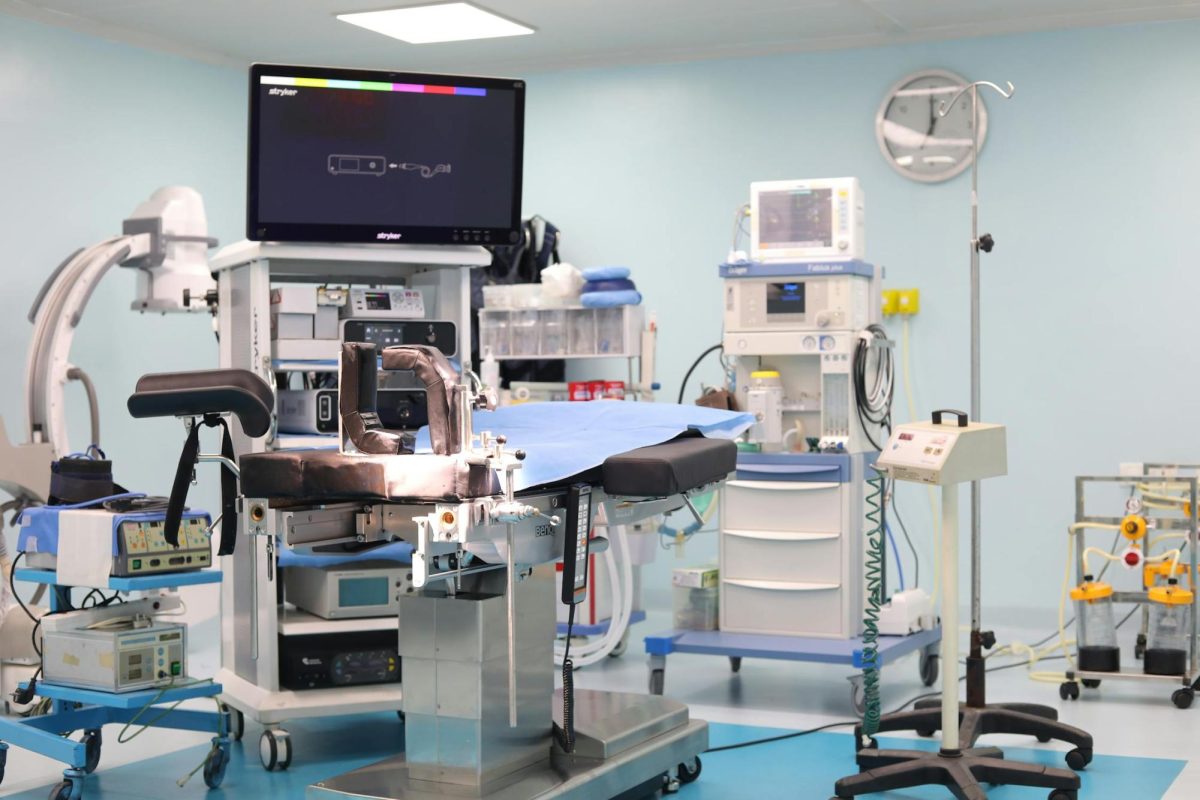
In the university’s simulation lab, students were introduced to realistic medical scenarios using advanced mannequins and actor patients. They could try to do procedures such as intubation, reflex testing, and CPR on a cardiac arrest dummy.
During the presentation and jeopardy game about pharmacy, students and staff alike all learned something new.
“I didn’t even know that there are specializations in pharmacy!” laughs Ms. Wise, one of the supervisors on the trip.
Students also learned about Osteopathic Manipulative Medicine (OMM), a branch of medicine that focuses on diagnosing and treating conditions through physical manipulation of the body.
Another stop introduced Occupational Therapy, where students demonstrated how everyday objects -from utensils to writing tools-can be modified to help individuals with physical or sensory challenges live more independently.
Still, the highlight of the day for many students was the Gross Anatomy Lab.
“My favorite part was the cadaver lab,” said junior Sophia Owca. “It was so cool to see the lungs and the heart up close and have the medical students explaining everything to us.”
Seeing the organs in person left a strong impression.
“The Gross Anatomy Lab was really interesting because you could actually see how the organs and muscles look in real life,” said junior Raluchukwu Nwabuike.
Another really popular station was Dentistry, where the students experienced what it is like to work on a 3D model of teeth, including drilling, filling up a hole and scanning their fixed models into a computer.
Beyond the fascinating labs, the visit also gave students the chance to talk with medical students about their academic journeys and what it takes to pursue a career in healthcare.
By the end of the trip, students left with new knowledge, unforgettable experiences, and perhaps even a clearer vision of their future in medicine.