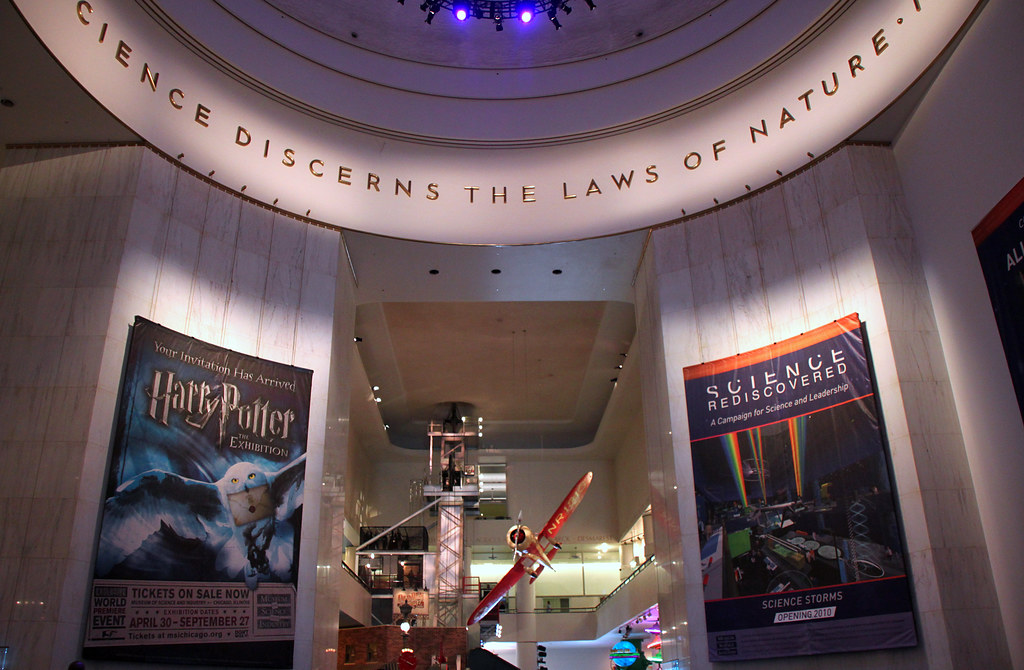
For students interested in how science connects to real life, a recent field trip to the Museum of Science and Industry offered an exciting and meaningful experience. The visit—organized for Anatomy and Physiology classes and in collaboration with Special Needs classes—allowed students to explore interactive exhibits while building new connections with one another.
Throughout the day, students moved through a variety of exhibits that highlighted different aspects of science, technology, and the human body. One of the most memorable stops was the Blue Paradox, an immersive experience focused on the impact of plastic pollution in our oceans. Through visuals, sound, and interactive displays, students gained a deeper understanding of environmental challenges and the role humans play in protecting ecosystems.
In addition to environmental science, the trip also reinforced topics studied in class. Many exhibits are connected directly to anatomy and physiology, allowing students to see scientific concepts in action. From learning about human biology to exploring technological innovations in medicine, the museum provided a hands-on extension of classroom learning.
“The prenatal exhibit was really interesting,” said senior Dana Gebhardt about one of the medical exhibits. “You could see the developmental stages in order; that was fascinating.”
“I think that it is important for our students to get out and learn in the world as much as being in the classroom,” said Mr. Marchand, one of the teachers and chaperones.
Another important aspect of the trip was the collaboration with the Special Needs class. Students worked together, explored exhibits in groups, and supported each other throughout the day. This created a more inclusive environment and allowed everyone to share the experience in a meaningful way.
“It was nice to share the experience with our special education classmates and make some new friends,” said junior Hania Mekonnen.
Beyond the exhibits themselves, the visit encouraged curiosity, teamwork, and a deeper appreciation for science. By the end of the day, students walked away not only with new knowledge but also with memorable experiences and stronger connections with their peers.